Sheffield, the Home of Football: How the City Shaped the Game
By Sheffield Weekly
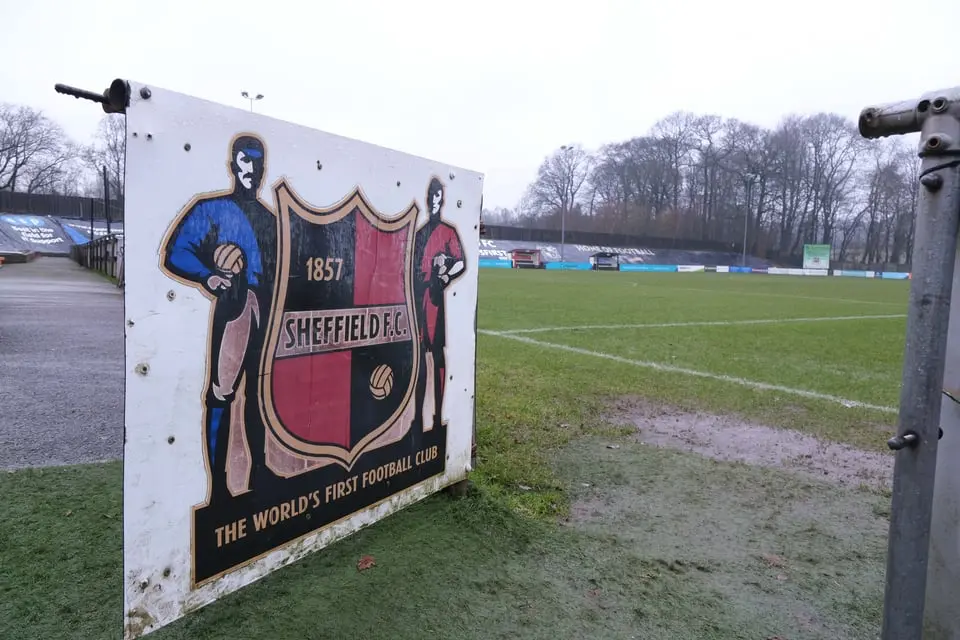
On 24 October 1857, two Sheffield cricketers founded a football club. Last month it turned 169. That makes it older than Real Madrid, Barcelona, Manchester United and every club in the Football League.
Sheffield FC is just the start. The city also gave football its oldest ground, its oldest fixture, one of its first tournaments and several of the rules that every game still uses. London tends to get the credit, because the Football Association was founded there in 1863. But for the game's first twenty years, Sheffield was doing its own thing and often doing it first.
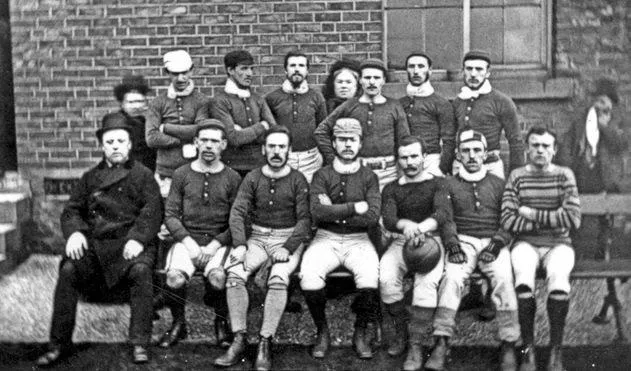
1857: Sheffield FC, the world's oldest football club
Members of a Sheffield cricket club had been having informal kickabouts since around 1855, with no proper rules at all. In October 1857, two of them, Nathaniel Creswick and William Prest, made it official. The club's inaugural meeting took place at Parkfield House in Highfield.
FIFA recognises Sheffield FC as the oldest existing independent football club in the world. In 2004 the club received the FIFA Order of Merit. Only one other club has ever been given it: Real Madrid.
1858: The Sheffield Rules
A club needs rules, and in 1858 Creswick and Prest wrote some. The club approved them that autumn and published them in 1859. They are widely seen as the first detailed set of football rules written by a club, rather than a public school or a university.
Those rules are worth a lot. In 2011 the club sold its historic archive at Sotheby's, including a handwritten 1858 draft of the rules and a printed 1859 copy. An anonymous telephone bidder paid £881,250, at the time a record for football memorabilia at auction. The club said the money would secure its future.
What Sheffield gave the game
Sheffield clubs kept tweaking their rules through the 1860s. A surprising amount of what they came up with is still in every match you watch:
- The crossbar: Sheffield set a bar across the goal at nine feet in 1862. It was lowered to eight feet in 1875 to match the FA
- Changing ends: from 1862, teams swapped ends halfway through a match, though only if nobody had scored
- Umpires: Sheffield matches had them by the end of 1862
- The corner kick: introduced in 1868
- Free kicks for fouls: extended to tripping, hacking and pushing in 1868
- Heading: the Sheffield game is credited with developing it, after the old "fair catch" was scrapped
- Extra time: already in use during the 1867 Youdan Cup, and famously in the 1868 Cromwell Cup final, which finished goalless and kept going until somebody scored
You can read the 1862 rules in full, and the history of how the Sheffield Rules changed is well worth an evening if you're into this sort of thing.
1860: Hallam and the world's oldest derby
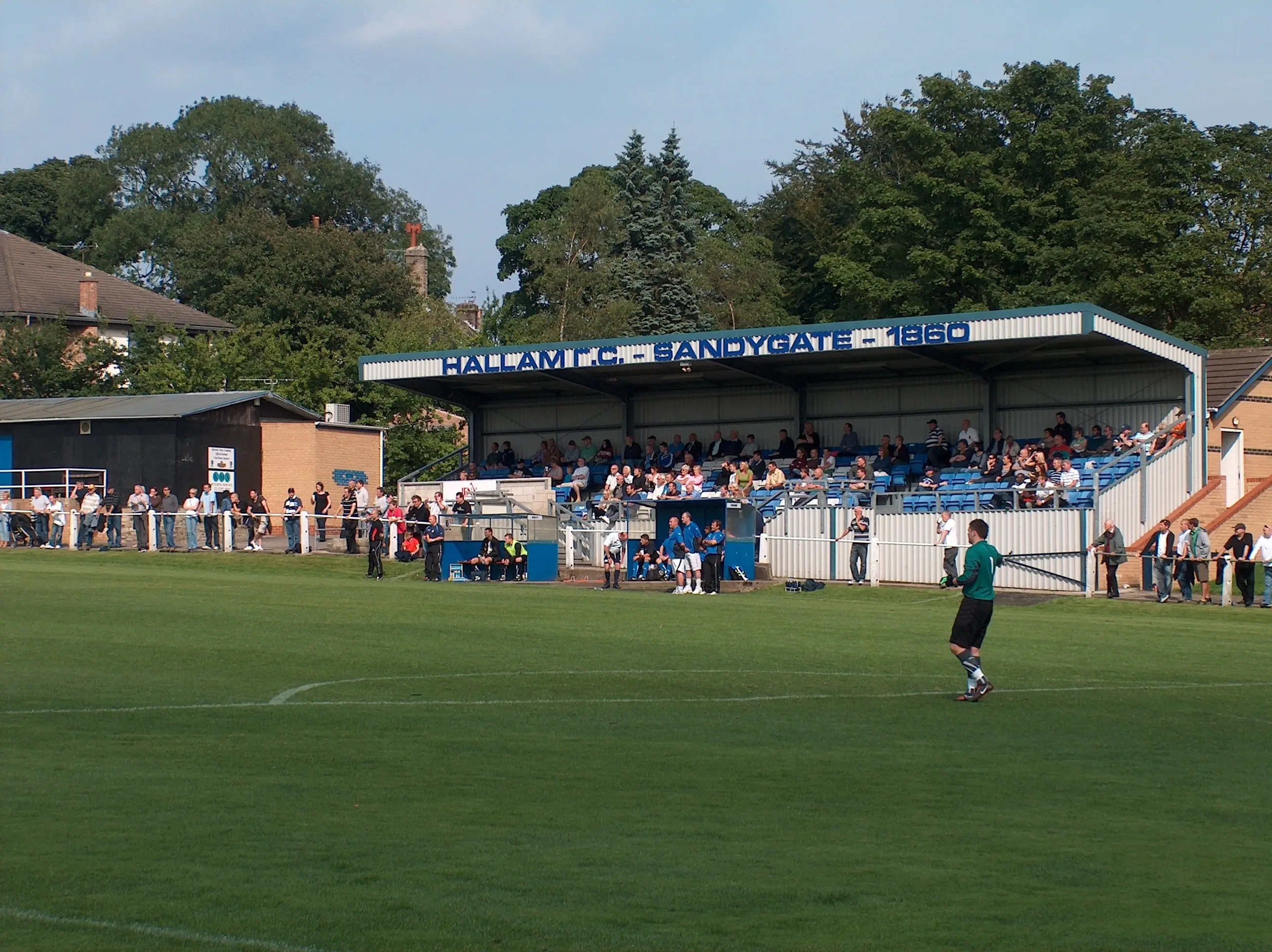
Three years after Sheffield FC, a second club was formed in Crosspool: Hallam FC. Their home was Sandygate, and it still is. Guinness World Records recognises Sandygate as the oldest football ground in the world.
On Boxing Day 1860, Hallam hosted Sheffield FC at Sandygate, and Sheffield won 2–0. The fixture is now known as the Rules Derby, and it's the oldest in world football. The two no longer share a league, but they still meet in local cup ties and pre-season friendlies, and Sandygate draws a big crowd when they do.
1862: Football comes to Bramall Lane
Bramall Lane opened in 1855 as a cricket ground. Its first football match came on 29 December 1862, when Sheffield and Hallam drew 0–0 in a game that raised money for Lancashire's cotton mill workers, who were out of work during the cotton famine.
It's widely regarded as the oldest stadium in the world still hosting professional football. That's a fact Blades fans will happily remind you of.
1866: Sheffield takes on London
Sheffield FC joined the new Football Association soon after it formed in London in 1863, but the city kept its own rules. On 31 March 1866, Sheffield played a combined FA side under London rules. The teams agreed to play for 90 minutes, an early landmark on the way to the standard match length.
Between 1871 and 1876, Sheffield and London played 16 more representative matches. Two cities, two rulebooks, and a lot of arguments about which one was right.
1867: One of football's first tournaments
Thomas Youdan, a Sheffield theatre owner and former councillor, put up a trophy in early 1867, partly as publicity for his business. Twelve local clubs entered the Youdan Cup, one of the first football tournaments ever played. Thousands turned up for the final at Bramall Lane, where Hallam beat Norfolk without either side scoring a goal. Instead, it came down to rouges, an old Sheffield tie-breaker. You scored one when the ball was kicked between flags on either side of the goal and you were the first to touch it. Hallam got two in the last five minutes, and Norfolk got none.
The same year brought two more big moments. The Sheffield Football Association was founded, and so was the football section of the Wednesday Cricket Club. That second one became Sheffield Wednesday. The following year, Wednesday won the Cromwell Cup, the one that went to extra time.
1877: Two codes become one
By the mid-1870s, having two rulebooks wasn't working. In April 1877 the FA changed its laws, and a week later the Sheffield Association agreed to drop its own laws and adopt the FA's. The game was unified, and a lot of Sheffield's ideas went with it.
1878: The first floodlit match
On 14 October 1878, Bramall Lane hosted a match under electric lights. Two Sheffield sides, the Reds and the Blues, played in front of a crowd estimated at around 20,000. The first competitive floodlit game came later, elsewhere, but Sheffield showed it could be done.
Eleven years later, in 1889, Sheffield United were formed to play at Bramall Lane. That gave the city the rivalry it's had ever since. Our history of the Steel City Derby picks up the story from there.
Where to see Sheffield's football history today
- Sandygate, Crosspool (S10 5SE): watch Hallam at the oldest football ground in the world. Tickets cost a fraction of a Premier League game and you can stand right by the pitch
- Sheffield FC: the club has played at the Home of Football Stadium in Dronfield, just over the Derbyshire border, since 2001. Long-running plans to bring it back into Sheffield, at Meadowhead, haven't been settled yet
- Bramall Lane: see the world's oldest stadium still hosting professional football on a matchday. Fixtures and tickets are on Sheffield United's website
- Hillsborough: home of Sheffield Wednesday since 1899. The club's official history covers the early years at Olive Grove
Make a day of it. Catch an afternoon game at Sandygate, then head into town for a pint. Our craft beer pub crawl has the route. For more of the city's big names, read our list of Sheffield's most successful people and groups.
Want More Sheffield?
Sheffield Weekly is a free newsletter covering the best of the city - new openings, local food, things worth knowing that don't always make the local news. No spam. No filler. Just Sheffield.
Sign up here and join the hundreds of Sheffield people already reading.
This guide was last checked on 27 October 2026.
More Sheffield guides
Join 1000+ Sheffield locals in the know
Get the best of Sheffield delivered to your inbox every Sunday. Free forever.